
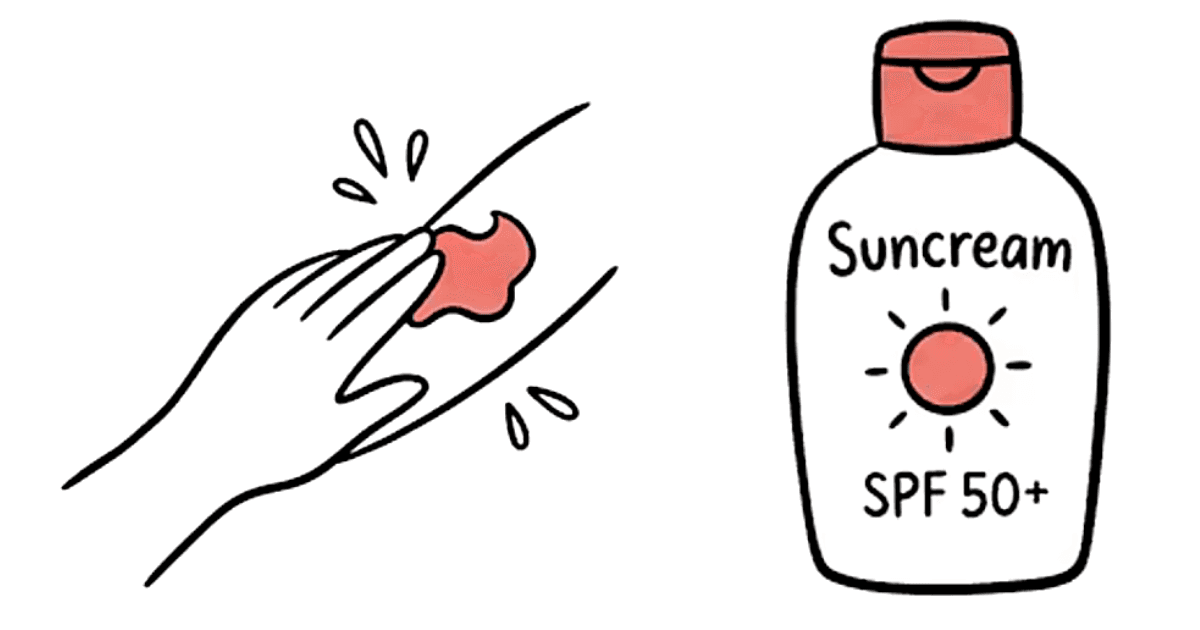
Gibraltar sits at roughly the same latitude as northern Morocco, which means UV levels here are meaningfully stronger than in the UK for a good chunk of the year, and the season is long. You are not on holiday where you can afford to be a bit blasé for a fortnight. This is daily life, and small children's skin is considerably more vulnerable to UV damage than adult skin.
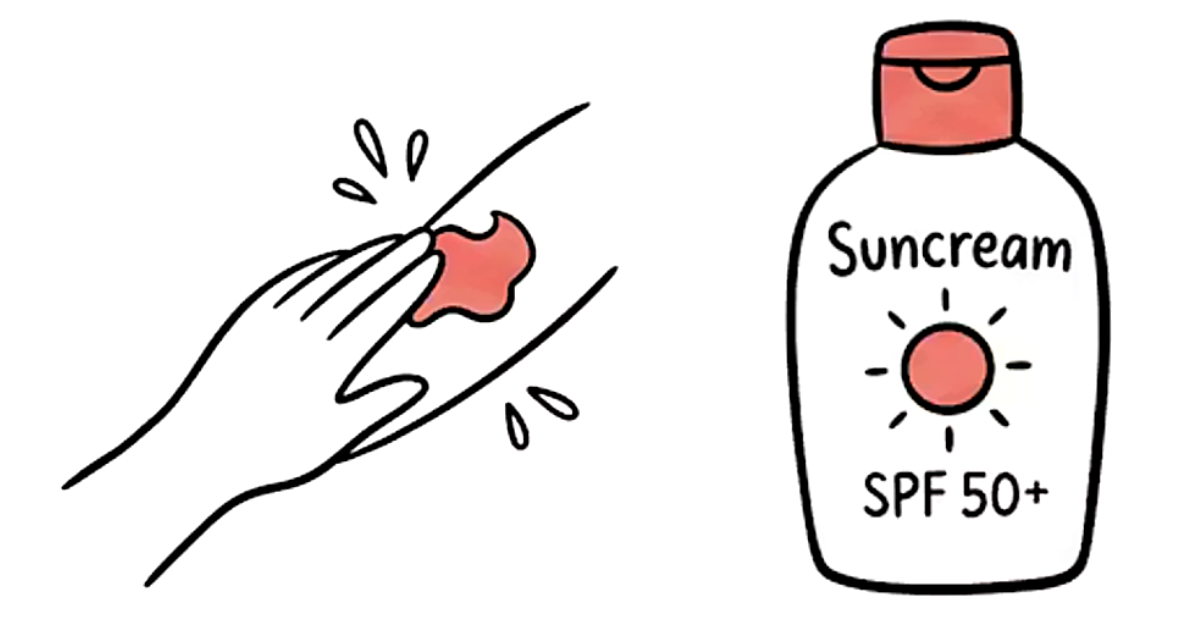
So. Here is some useful info.
SPF: what the numbers actually mean
Two things matter on the label, not one.
SPF (the number) measures protection against UVB rays - the ones that cause sunburn. SPF 30 blocks around 97% of UVB. SPF 50 blocks around 98%. That gap sounds small; in practice, for fair-skinned or sensitive children, it matters. UK sunscreens are rated on a scale up to 50+, which offers the strongest UVB protection.
The star rating (up to 5 stars on UK products) measures UVA protection - the rays that penetrate deeper, do not cause visible sunburn, but do cause long-term skin damage. Sunscreens offering both UVA and UVB protection are sometimes called broad spectrum. You want both a high SPF and a high star rating. A 5-star SPF 15 is not a substitute for SPF 50.
For children, the NHS recommends at minimum SPF 30 with at least 4-star UVA protection. In Gibraltar's climate, SPF 50 is the sensible default.
What about babies?
You will often hear that sunscreen should not be used on babies under 6 months old as a blanket rule, but the NHS is slightly more nuanced. The actual NHS baby sun safety guidance says sunscreen is not recommended for under-6-months, with the strong preference being shade and clothing. The Children's Hospital of Philadelphia puts it as: "if sunscreen is needed, then mineral sunscreen is recommended."
For babies over 6 months, mineral sunscreens (those using zinc oxide or titanium dioxide as the active ingredient) are generally the recommended choice. These physical blockers stay on the skin surface rather than being absorbed, and block a wider spectrum of light. They tend to leave a slight white cast, which small children find either hilarious (I'm a snowman!) or deeply offensive, depending on the child.
The ingredient question (and the Yuka rabbit hole)
If you have ever opened the Yuka app on a suncream bottle and watched the score collapse, you are not imagining things. Concerns about certain chemical sunscreen ingredients (particularly oxybenzone and octinoxate) are real and ongoing. A 2025 review of sunscreen UV filters raised concerns around endocrine and reproductive health, while the FDA says it still needs more data before it can make final safety and effectiveness determinations for several chemical filters, including oxybenzone and octinoxate.
For children especially, many dermatologists now lean towards mineral-based options (zinc oxide, titanium dioxide) specifically because mineral sunscreens have not been shown to be absorbed into the bloodstream in the same way as some chemical filters.
The practical takeaway: you do not need to panic about every bottle you have ever used. But if you are choosing a new suncream for a baby or young child, a mineral option is a reasonable preference.
The reef angle
This is not just a tropical holiday concern. Gibraltar's waters are worth protecting. Chemical sunscreen ingredients like oxybenzone, octinoxate, and octocrylene are linked to coral bleaching and disruption to marine ecosystems. Mineral sunscreens are the better choice if your children are regularly in the sea which, let's be honest, they are.
One caveat: "reef safe" claims on packaging are unregulated, so do not take the label at face value. Check the active ingredients. You want zinc oxide or titanium dioxide, not a long list of chemical filters dressed up in eco-friendly packaging.
Does suncream block vitamin D?
This comes up a lot, and it deserves a straight answer.
Technically, yes, sunscreen reduces UV absorption and therefore vitamin D synthesis. In practice, the amount blocked by regular sunscreen use is minimal, and most people are still exposed to enough incidental sunlight to maintain healthy levels. For anyone genuinely concerned, or for children who are well-covered during peak hours, dermatologists recommend dietary sources like fortified dairy and fatty fish, or a simple supplement, rather than skipping sun protection.
In Gibraltar, where children are outdoors a lot, through windows, on the way to school, at break time, the vitamin D argument for skipping suncream is not particularly strong. Use the suncream.
The "am I applying enough?" problem
Most people do not use nearly enough. Adults covering their whole body should be using around 6 to 8 teaspoons. Applied too thinly, a high-SPF product gives much weaker protection than the label suggests. For children, scale accordingly, but do not go sparse. And reapply after swimming or sweating. Every time.
Where Gibraltar parents actually buy it
Based on what local parents say:
Alturist at the Specialist Medical Clinic keeps coming up, and for good reason. It is made by skin specialists, comes in SPF 30 and 50 (cream and spray), and parents with sensitive-skinned children rate it highly. The 1-litre bottle is particularly popular for families who go through a lot of it. Bonus: for every bottle sold, money goes to support albino children in Africa. Around £5.75 for the basic cream, which is genuinely good value for a dermatologist-formulated product.
Mustela has fans among parents with young babies; it scores well on Yuka and is safe for newborns.
Morrisons gets a consistently warm reception: affordable, easy to apply, holds up reasonably well to water, and the mini bottle (around £3) is useful for bags. Multiple parents report no burns across several years of use.
Boots online via O20 Logistics is the answer if you want a wider range delivered to your door.
A few things worth knowing about the sun here
The UV index here peaks at 10-11 in summer, "very high" to "extreme" on the WHO UV index scale. That is not "slap on some factor 15 and crack on" territory. Peak hours (roughly 11am to 4pm) are worth taking seriously, especially for fair-skinned children.
Apply before you leave the house, not when you arrive somewhere. And if your child is going to school on a sunny day: sunscreen can go out of date, so do not rely on that old bottle at the back of the cupboard. Check the back of the bottle for a small symbol of an open pot with a number inside - that is the PAO (Period After Opening) mark, and it tells you how many months the product is good for once opened. A "12M" means 12 months. If you cannot remember when you opened it, that is probably your answer.
 The open-pot symbol tells you how many months a product should be used for after opening.
Have a recommendation, or a brand to avoid? Tell us.